
Views: 1 Author: Publish Time:2026-10-22 17:11:08 Origin: Orpinegift
When ordering custom enamel pins in bulk, one of the first decisions you will need to make is whether to choose hard enamel pins or soft enamel pins.
Both styles are popular for corporate branding, events, clubs, retail merchandise, schools, promotional campaigns, and collectible products. However, they differ in appearance, texture, production process, cost, and the type of design they work best with.
For buyers sourcing custom pins for a large order, understanding these differences can help you choose the right option before approving artwork and starting production.
In this guide, we explain the key differences between hard enamel and soft enamel pins, their advantages, common applications, and what to consider when placing a bulk custom pin order.
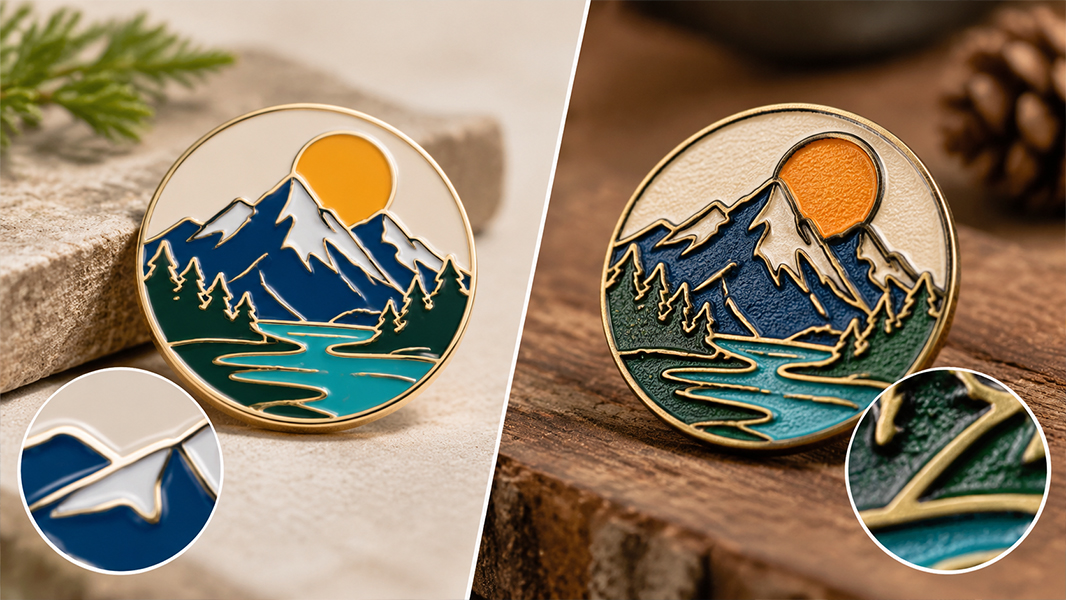
Hard enamel pins are known for their smooth, polished surface and premium finish.
During production, colored enamel is filled into the recessed areas of the metal pin and then polished until the enamel and metal lines are almost level with each other.
The result is a flat and smooth surface that feels refined and durable.
Hard enamel pins are often selected when brands want a clean, high-end appearance.
Hard enamel pins typically offer:
A smooth and polished surface
A premium appearance
Strong durability
Clear metal outlines
Good resistance to scratches
A professional feel suitable for branded merchandise
They work particularly well for corporate gifts, premium promotional products, retail merchandise, membership pins, and commemorative designs.
Soft enamel pins use a slightly different production method.
The enamel is filled into the recessed areas of the pin, but unlike hard enamel pins, the surface is not polished completely flat.
This leaves the metal outlines slightly raised above the colored enamel.
As a result, soft enamel pins have a more textured and dimensional feel.
Soft enamel pins typically provide:
Raised metal details
A textured surface
Strong visual depth
Flexible design possibilities
Good color definition
A cost-effective option for many bulk orders
Soft enamel pins are especially popular for promotional giveaways, event merchandise, clubs, schools, fan products, fashion accessories, and creative brand designs.
Although the two styles may look similar at first, several important differences can affect your final product.
The most noticeable difference is the surface.
Hard enamel pins have a smooth surface because the enamel is polished to the same level as the metal outlines.
Soft enamel pins have recessed enamel areas with raised metal edges.
If you want a sleek and refined finish, hard enamel is usually the better choice.
If you prefer more texture and depth, soft enamel may be more suitable.
Hard enamel pins usually have a clean and premium appearance.
They are commonly used when the design needs to look formal, elegant, or highly polished.
Soft enamel pins tend to look more dimensional because the raised metal lines create additional visual contrast.
This makes them popular for bold logos, illustrated designs, and creative merchandise.
Both types can support detailed custom designs, but soft enamel often performs particularly well when the design includes visible metal lines and recessed color areas.
Hard enamel is better suited to designs that benefit from a smoother and more uniform finish.
When preparing artwork, it is important to consider:
Line thickness
Color separation
Small details
Text size
Plating color
Pin size
An experienced custom enamel pin manufacturer can review your artwork and recommend adjustments before production.
Both hard enamel and soft enamel pins can be durable when manufactured correctly.
However, hard enamel pins generally offer a stronger resistance to surface scratches because of their polished construction.
This makes hard enamel a popular choice for pins that will be worn regularly or sold as premium merchandise.
Soft enamel pins are also suitable for everyday promotional use, especially when cost and design flexibility are important.
Cost is another important factor for bulk orders.
In many cases, soft enamel pins can be more economical than hard enamel pins because the finishing process is simpler.
However, the final price depends on several factors, including:
Order quantity
Pin size
Number of enamel colors
Metal plating
Backing type
Packaging
Custom shapes
Special finishes
For accurate pricing, buyers should request a quotation based on their actual artwork and required quantity.
There is no single answer because the best option depends on your project.
Choose hard enamel pins if you want:
A premium appearance
A smooth finish
High durability
Corporate or retail presentation
A polished brand image
Choose soft enamel pins if you want:
More visible texture
Strong metal detailing
Flexible creative designs
Promotional merchandise
A cost-effective bulk option
For many brands, the decision comes down to the desired appearance and target budget.
In addition to choosing hard or soft enamel, plating also has a major impact on the appearance of a custom pin.
Popular plating options include:
Gold plating creates a warm and premium appearance. It is often used for awards, luxury branding, commemorative pins, and formal corporate designs.
Silver provides a clean and modern look that works well with many logo styles and enamel colors.
Black nickel creates a darker and more contemporary appearance. It works particularly well with bold, modern, or high-contrast artwork.
Antique gold, antique silver, and antique brass can give pins a vintage or traditional appearance.
Your plating choice should complement the colors, style, and purpose of your design.
Good artwork is essential for successful enamel pin production.
Before submitting your design, consider the following points.
Very small text or extremely thin lines may not reproduce well during metal production.
Simplifying unnecessary detail can improve the final result.
Enamel colors usually need to be separated by metal lines.
If your artwork contains complex gradients or photographic effects, your manufacturer may recommend simplifying the design.
A larger pin gives more space for fine details, while smaller pins may require simpler artwork.
Popular sizes vary depending on the application, but the ideal size should balance visibility, cost, and design complexity.
Pantone color references can help improve consistency between your original design and the final enamel colors.
A digital proof should normally be approved before mass production begins.
To receive a more accurate quote for custom enamel pins, provide as much information as possible.
Important details include:
Artwork or logo
Required quantity
Pin dimensions
Hard enamel or soft enamel
Metal plating
Number of colors
Backing type
Packaging requirements
Delivery destination
Required delivery date
Providing complete specifications helps the manufacturer evaluate the project quickly and reduces unnecessary revisions.
MOQ can vary depending on the manufacturer, design, production method, and customization requirements.
For buyers placing bulk orders, larger quantities often reduce the average cost per pin because tooling and setup costs are distributed across more units.
Before placing an order, it is useful to confirm:
Minimum order quantity
Sample or proof process
Production lead time
Packaging options
Shipping method
Quality inspection process
For promotional events or product launches, buyers should also allow enough time for artwork approval, production, inspection, and international shipping.
Different applications may benefit from different enamel styles.
Hard enamel is often preferred because of its clean and professional appearance.
Soft enamel can be an effective option for large promotional quantities and creative giveaway designs.
Both styles can work well. Hard enamel may support a more premium price point, while soft enamel can create strong visual character.
Hard enamel works well for membership recognition, while soft enamel is suitable for more casual community merchandise.
Both options can be used for student organizations, awards, events, alumni programs, and promotional merchandise.
A reliable manufacturer does more than simply produce the pin.
The supplier should help you evaluate artwork, production methods, plating, backing options, packaging, and order quantity.
At Orpinegift, we support custom promotional product projects from artwork review to bulk production and delivery.
Our team can help buyers compare hard enamel and soft enamel options based on design requirements, budget, quantity, and intended use.
Hard enamel pins can be more expensive because of the additional finishing and polishing process. However, final pricing also depends on size, quantity, plating, colors, packaging, and other customization requirements.
Both types can be durable, but hard enamel pins generally offer a smoother and more scratch-resistant surface.
Yes. Custom enamel pins can be produced using company logos, event graphics, illustrations, mascots, text, and other original artwork.
Soft enamel is often a good option for promotional campaigns because it provides strong visual impact and can be cost-effective for larger quantities.
Hard enamel is generally considered more premium because of its smooth, polished finish.
Yes. Artwork can be reviewed before production to help ensure line thickness, color separation, dimensions, and other details are suitable for enamel pin manufacturing.
Choosing between hard enamel and soft enamel pins depends on your design, budget, quantity, and the impression you want your finished product to create.
Hard enamel offers a smooth, polished, and premium appearance, while soft enamel provides more texture, depth, and creative flexibility.
For bulk custom orders, the best approach is to review your artwork with an experienced manufacturer before production.
If you are planning a custom enamel pin project for your brand, event, organization, or promotional campaign, Orpinegift can help you evaluate materials, plating, artwork, packaging, MOQ, and production requirements.
Contact Orpinegift to request a quote for your next custom enamel pin order.